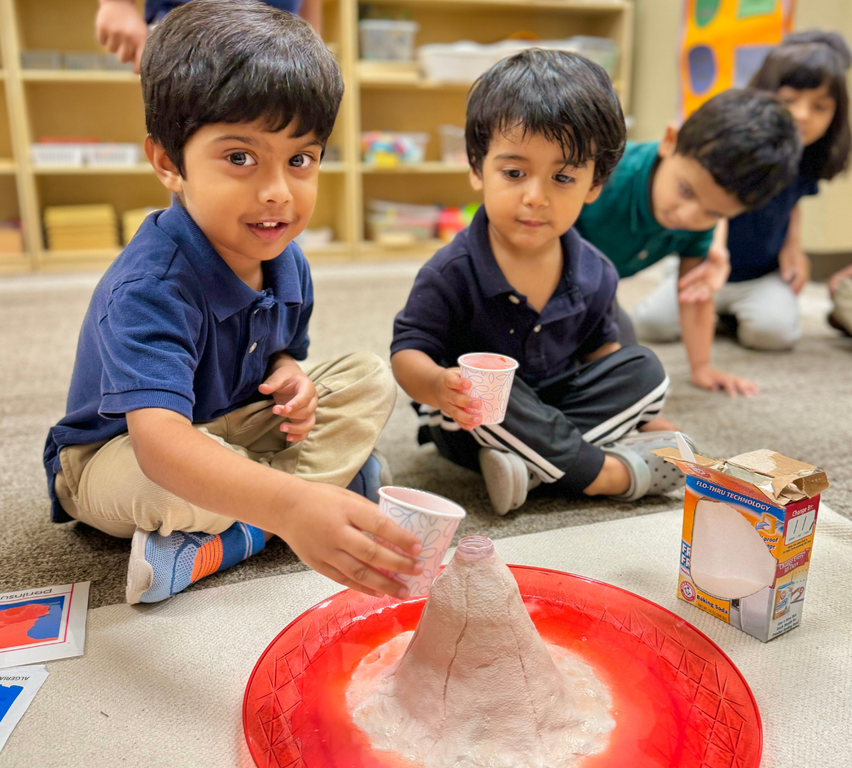
Curiosity comes naturally to young children. A preschooler can turn an ordinary walk into an investigation, a cardboard box into an invention, or a simple question into a long conversation about how the world works. These moments may appear small, but they are an important part of early learning.
Preschool provides an environment where that natural curiosity can be encouraged every day. Instead of limiting education to letters, numbers, or worksheets, a thoughtful preschool program gives children opportunities to observe, experiment, make choices, solve problems, and communicate their ideas.
When children discover that their questions are valued, they become more willing to explore unfamiliar concepts. Over time, everyday learning experiences can help children become confident thinkers who see learning as something exciting rather than something they are simply required to do.
Curiosity Is the Starting Point for Learning
Young children frequently ask questions: Why does it rain? Where do bugs live? Why did the tower fall? What happens if these two colors are mixed?
Questions like these demonstrate a desire to understand relationships between objects, actions, and events.
Adults can respond by immediately providing an answer, but preschool offers another possibility: helping children investigate the question themselves.
If a child wonders which objects will float, for example, an educator might provide a container of water and several safe objects to test. The child can make predictions, conduct an experiment, observe the results, and discuss what happened.
This transforms a question into an active learning experience.
Over time, children begin understanding that they have the ability to investigate ideas and discover answers independently.
Everyday Materials Can Become Learning Tools
Children don’t always need sophisticated equipment to have meaningful educational experiences. Some of the richest preschool learning begins with familiar materials.
Blocks can introduce balance, measurement, shapes, and engineering. Buttons can become tools for counting, sorting, and pattern recognition. Water can inspire experiments involving volume, movement, sinking, and floating.
Even preparing a snack can involve mathematics, vocabulary, sequencing, coordination, and practical life skills.
The value comes from how children interact with the materials.
Montessori Reggio Academy describes its educational approach as combining Montessori education with Reggio Emilia project-based learning and a STEAM focus. Its learning environments are designed to encourage children to explore and develop at their own pace.
This type of hands-on approach gives children opportunities to connect ideas with real experiences.
Choice Encourages Children to Follow Their Interests
Curiosity becomes stronger when children have some ownership over what they are doing.
Imagine two preschoolers entering a classroom. One immediately chooses a counting activity, while another is fascinated by a collection of natural objects. Both children can be engaged in meaningful learning even though their activities are completely different.
Providing age-appropriate choices helps children identify their interests and take responsibility for their learning.
This doesn’t mean preschool classrooms lack structure. Effective child-centered education combines carefully prepared activities with guidance from educators.
At Montessori Reggio Academy, students are encouraged to work at their own pace and make choices within prepared learning environments, with teachers providing guidance and support.
When children are genuinely interested in an activity, they are often more willing to concentrate, persist, and explore it deeply.
Questions Can Be More Valuable Than Quick Answers
Curious children ask many questions, and educators can use those questions to extend learning.
Suppose a child asks, “Why did my plant get taller?”
Instead of immediately explaining everything about plant growth, a teacher might respond with another question:
“What do you think helped it grow?”
That response encourages the child to think.
The conversation might eventually lead to observations about water, sunlight, soil, roots, and leaves. Children could measure their plants, draw pictures, or compare plants kept in different conditions.
One question can therefore become a multi-day investigation involving science, mathematics, language, and art. Elementary Schools in Sugar Land
Play Creates Opportunities for Problem-Solving
Play is one of the most powerful forms of everyday learning during preschool.
Consider children trying to build a tall structure from wooden blocks. When the structure falls, they face a problem.
Should they create a wider base? Use fewer blocks? Change the shape? Work with a friend?
Nobody needs to turn the experience into a formal engineering lesson. The challenge itself encourages children to test possibilities.
Through play, preschoolers regularly practice:
- Making predictions
- Trying different solutions
- Adjusting plans
- Communicating ideas
- Negotiating with peers
- Learning from unsuccessful attempts
These experiences can help children become comfortable with the idea that not succeeding immediately is part of discovery.
Nature Invites Endless Questions
The natural world offers an extraordinary classroom for young children.
A walk outside might lead to questions about clouds, insects, leaves, shadows, rocks, birds, or changing weather. Because these discoveries are spontaneous, children often become deeply interested in understanding them.
Educators can extend outdoor experiences by encouraging children to observe details, collect safe natural objects, sketch what they see, compare textures, or discuss seasonal changes.
A child who discovers a caterpillar, for instance, may become interested in insects and life cycles. That interest can lead to books, artwork, classroom discussions, observations, and science activities. Elementary Schools in Katy
Curiosity creates the direction, while educators provide resources that allow the investigation to grow.
Art Gives Children Another Way to Investigate Ideas
Art in preschool isn’t simply about producing something attractive to take home.
Painting, sculpting, drawing, cutting, building, and combining materials give children opportunities to make choices and experiment.
What happens when yellow and blue paint meet? Which materials can be attached to cardboard? How can clay be shaped so it stands upright?
Creative work involves constant decision-making.
The Reggio Emilia approach incorporated by Montessori Reggio Academy treats children as active participants in learning and emphasizes exploration, project work, communication, and carefully selected environments and materials.
Art therefore becomes another language children can use to investigate and communicate their understanding of the world.
Practical Activities Connect Learning With Real Life
Preschoolers are often fascinated by activities adults consider ordinary.
Pouring water, washing an object, preparing food, fastening clothing, organizing materials, or caring for a classroom environment can all become meaningful learning experiences.
These activities encourage children to develop coordination, concentration, sequencing, responsibility, and independence.
Montessori Reggio Academy’s preschool-related programming includes practical-life experiences alongside activities supporting motor, cognitive, sensory, and social development.
Children can see an immediate purpose behind what they are learning. Instead of asking why a skill matters, they experience its usefulness directly.
Conversations Turn Experiences Into Deeper Learning
Children benefit not only from doing things but also from discussing what they have done.
After an activity, educators might ask:
“What did you notice?”
“Why do you think that happened?”
“What would you change next time?”
“Can you show me how you did it?”
These open-ended questions encourage children to organize their thoughts and communicate their reasoning.
Conversations between children can be equally valuable. When classmates explain ideas to one another, they learn to listen, consider another perspective, and communicate clearly.
Preschool therefore becomes a community of learners rather than a place where information travels only from teacher to child. Daycare in Sugar Land
STEAM Experiences Encourage Investigation
Science, technology, engineering, arts, and mathematics can all be introduced naturally during early childhood.
A preschool STEAM experience doesn’t need to look like an advanced science class. It could involve constructing a ramp and testing how different objects move down it. Children might create a bridge, mix colors, compare quantities, observe ice melting, or design something from recyclable materials.
Montessori Reggio Academy includes STEAM as part of its educational approach, emphasizing hands-on learning and helping students apply learning to real-life situations.
Activities like these encourage children to investigate cause and effect while developing creative approaches to problems. Daycare in Katy
Independence Builds Confidence to Explore
Curiosity requires a certain amount of confidence.
Children need to feel that they are allowed to try, make decisions, and occasionally make mistakes.
When adults complete every task for children, young learners have fewer opportunities to discover what they can accomplish independently. In contrast, a carefully prepared preschool environment can provide materials and routines that children can navigate at an age-appropriate level.
Completing a puzzle, cleaning a small spill, selecting an activity, or solving a construction problem gives children evidence that their actions matter.
That confidence can encourage them to approach the next challenge with greater enthusiasm.
Curiosity Can Grow Beyond the Preschool Classroom
Parents can reinforce curiosity at home without creating formal lessons.
Cooking can become an opportunity to discuss measurements and changes in ingredients. A neighborhood walk can inspire conversations about plants or construction. Laundry can introduce sorting and matching. Grocery shopping can involve counting, colors, categories, and new vocabulary.
Parents can also resist the urge to answer every question immediately.
Sometimes, “What do you think?” is a powerful response.
It tells children their ideas are worth considering and encourages them to become active participants in finding answers.
Building a Lifelong Relationship With Learning
The greatest benefit of encouraging curiosity in preschool isn’t simply helping children know more facts before kindergarten.
It is helping them develop a positive relationship with learning itself.
Children who are comfortable asking questions, experimenting, communicating ideas, and trying again after difficulties are developing habits that can support them throughout their education.
Montessori Reggio Academy’s philosophy emphasizes nurturing children’s innate potential and developing a lasting passion for learning through choice, exploration, and a prepared environment.
When everyday experiences are treated as opportunities for discovery, preschool children learn an important lesson: education isn’t limited to a particular activity, subject, or classroom. Learning can happen anywhere.
Final Thoughts
Preschool curiosity grows through countless small experiences—a question about an insect, a tower that needs rebuilding, a new color created at the art table, or the satisfaction of completing a practical task independently.
A strong early learning environment recognizes the value of these moments and gives children time, materials, guidance, and encouragement to investigate them. By making exploration part of everyday life, preschool can help children become observant, creative, persistent, and confident learners. Those qualities prepare children not only for the next classroom but also for a future in which curiosity continues to open the door to new discoveries.



Leave a comment